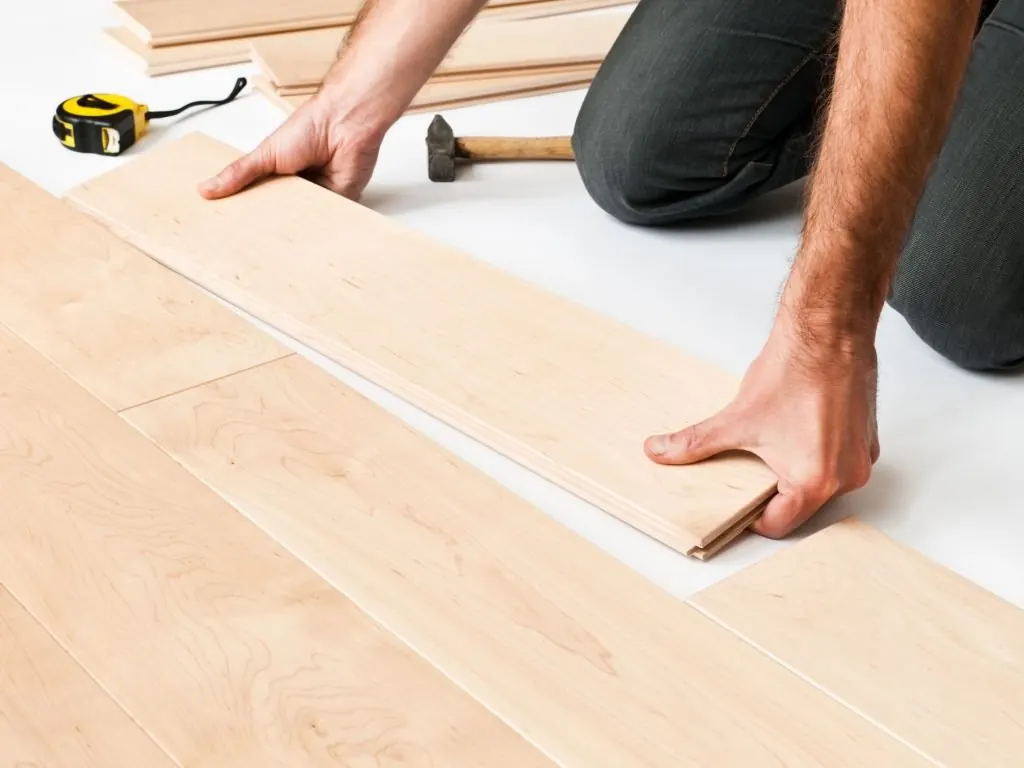

Laminate is one of the most DIY friendly floors out there. That does not mean every job should be DIY. Here is how to decide.
Introduction
Laminate flooring was designed to be easy to install. Click together planks, a floating installation and simple tools make it one of the friendliest floors for weekend projects. Still, plenty of DIY laminate floors end up with gaps, peaked joints and hollow spots. The difference usually comes down to preparation and planning.
Laminate flooring installation: the process at a glance
- Measure the room and order enough flooring plus extra for cuts and waste.
- Let the boxes acclimate in the room, following the manufacturer's directions.
- Remove old flooring, baseboards or quarter round as needed.
- Check the subfloor for flatness and moisture and fix any problems.
- Lay a moisture barrier on concrete and the right underlayment.
- Plan the layout so rows are balanced and the last row is not too narrow.
- Install planks row by row, staggering end joints and leaving expansion gaps.
- Cut around doorways, vents and cabinets, and undercut door casings.
- Install the last row, then baseboards, quarter round and transitions.
Signs your project is a good DIY candidate
- One or two simple rooms with few doorways
- A flat, dry subfloor
- Carpet or flat vinyl as the existing floor
- Basic tools and some carpentry experience
- Time to work carefully without rushing
Signs you may want a professional
- An uneven slab. Grinding and leveling concrete takes special tools and experience.
- Tile removal. Removing ceramic tile is loud, dusty and physically demanding.
- Large open spaces. Long runs need careful layout and transition planning to avoid movement problems.
- Kitchens. Cutting around cabinets and islands while keeping proper expansion gaps is tricky.
- Stairs. Laminate on stairs needs special nosing and careful work for safety.
- Matching other floors. Clean transitions to hardwood or tile take skill.
What professionals do differently
They check flatness, not just cleanliness
Pros use a long straightedge to find dips and humps and fix them before installing. That is the single biggest factor in a quiet, stable laminate floor.
They plan the whole floor before the first plank
Professionals measure across the room to balance the first and last rows, plan how hallways connect and decide where transitions belong.
They respect expansion gaps
Every floating floor needs room to move at walls, cabinets and fixed objects. Large areas may need expansion breaks in doorways.
They handle moisture properly
On Houston slabs, a moisture barrier is essential. Pros also check moisture readings before installing.
They finish the edges cleanly
Undercut door casings, neat baseboards and properly sized transitions make the floor look finished rather than homemade.
Conclusion
If your project is simple and your subfloor is flat, DIY laminate can be a rewarding way to save. If not, a professional install often pays for itself in avoided problems. For a step by step tutorial, see how to install laminate flooring in twelve steps or our tools and techniques guide. Reliable Hardwood Floors installs laminate floors throughout Houston.