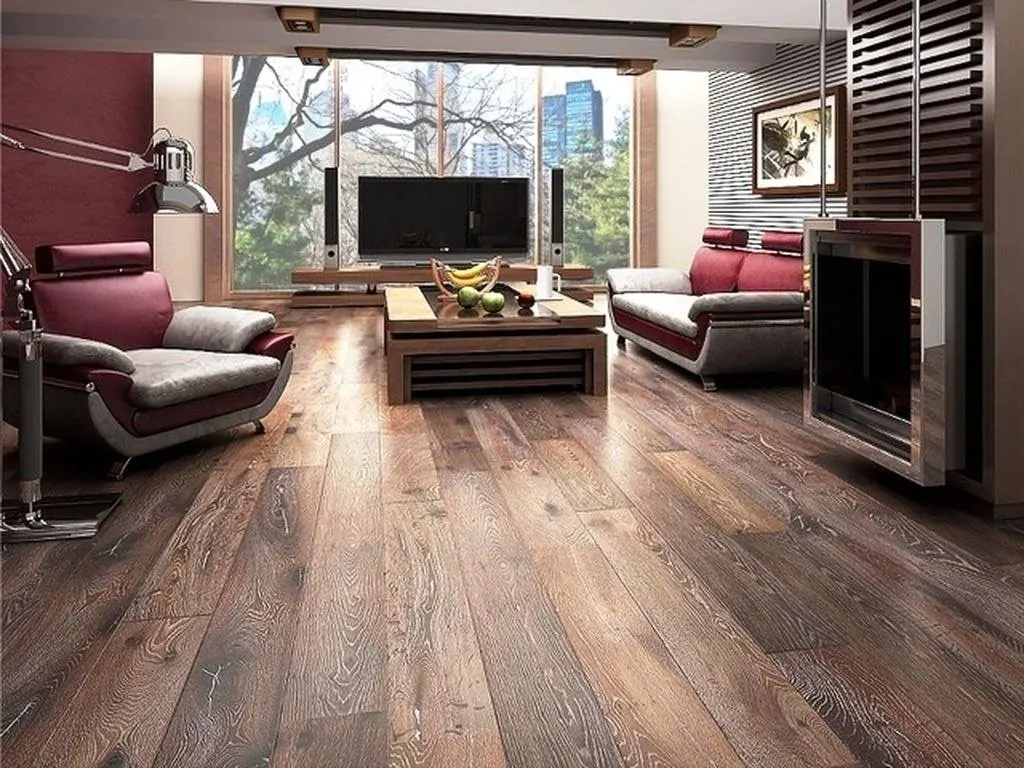
Engineered wood floors
Engineered Wood Floors Built for Gulf Coast Living
All the warmth of real hardwood on a layered core that stays stable through humid summers, dry winters and the concrete slabs most Houston homes sit on.
What makes engineered wood floors different
Engineered wood floors are real hardwood floors built a smarter way. Instead of one solid piece of wood, each plank has a top layer of genuine hardwood bonded to several layers of plywood or wood composite set at right angles to each other. Those cross layers fight against the natural tendency of wood to swell and shrink with humidity.
For Houston that is a big deal. Most homes here sit on concrete slab foundations, and our air swings from sticky summer humidity to drier winter days with the heat running. Solid wood can struggle in that environment without careful prep. Engineered wood was practically designed for it.
Why so many Houston homeowners choose engineered hardwood
- Glues directly to a flat concrete slab without a plywood subfloor
- Resists cupping and gapping as humidity changes through the seasons
- Makes wide planks practical, since wide boards move more as solid wood
- Often arrives prefinished, so installation is quicker with less dust
- Works over many radiant heating systems
- Uses less slow growing hardwood per square foot than solid boards
Engineered floors also tend to cost less than solid hardwood of the same species and width, which makes them a great middle ground between solid wood and laminate floors.
Reading the specs: wear layer, core and finish
Two engineered floors can look identical in a showroom and perform completely differently in your home. These are the details we walk you through before you choose.
Wear layer thickness
The wear layer is the real hardwood on top. It decides how long the floor lasts and whether it can be sanded later. Thin veneers around 1 millimeter can be screened and recoated but not sanded. Layers of roughly 3 to 4 millimeters can usually be sanded once or twice. Premium floors with 5 to 6 millimeter wear layers can be sanded several times, close to the life of a solid floor.
Core construction
Multi ply plywood cores are strong and stable and hold fasteners well. Some products use a hardwood composite or a lumber core. A thicker overall plank with more plies usually feels more solid underfoot and sounds more like a traditional floor.
Surface texture and finish
Smooth, wire brushed and hand scraped surfaces each have a different personality. Wire brushing opens the grain and hides scratches beautifully, which is why it is so popular with families who have dogs. Most engineered floors come with tough factory finishes, often aluminum oxide, that outlast many site applied finishes.
Species and style
White oak is the most requested engineered species we install right now, in natural, light and smoky tones. Hickory brings bold grain and real toughness. Maple is calm and modern. Walnut and exotic species bring rich color. Widths range from classic strips to planks of seven inches and more.
Where engineered wood works best
- Living rooms, dining rooms and bedrooms on a slab
- Kitchens, with quick cleanup of spills
- Second floor game rooms and offices over plywood
- Condos and townhomes where noise rules require a sound underlayment
How we install engineered hardwood
Moisture testing first
Slab moisture is the number one cause of failed wood floors in our area. We test the concrete and compare the readings with the adhesive and flooring manufacturer's limits. If the slab is too wet, we use an adhesive with a built in moisture barrier or a separate barrier system.
Flattening the subfloor
Engineered floors need a flat surface. We grind high spots on concrete, fill dips with a leveling compound and screw down any loose plywood. This step is what keeps the floor from feeling hollow or bouncy later.
Choosing the right method
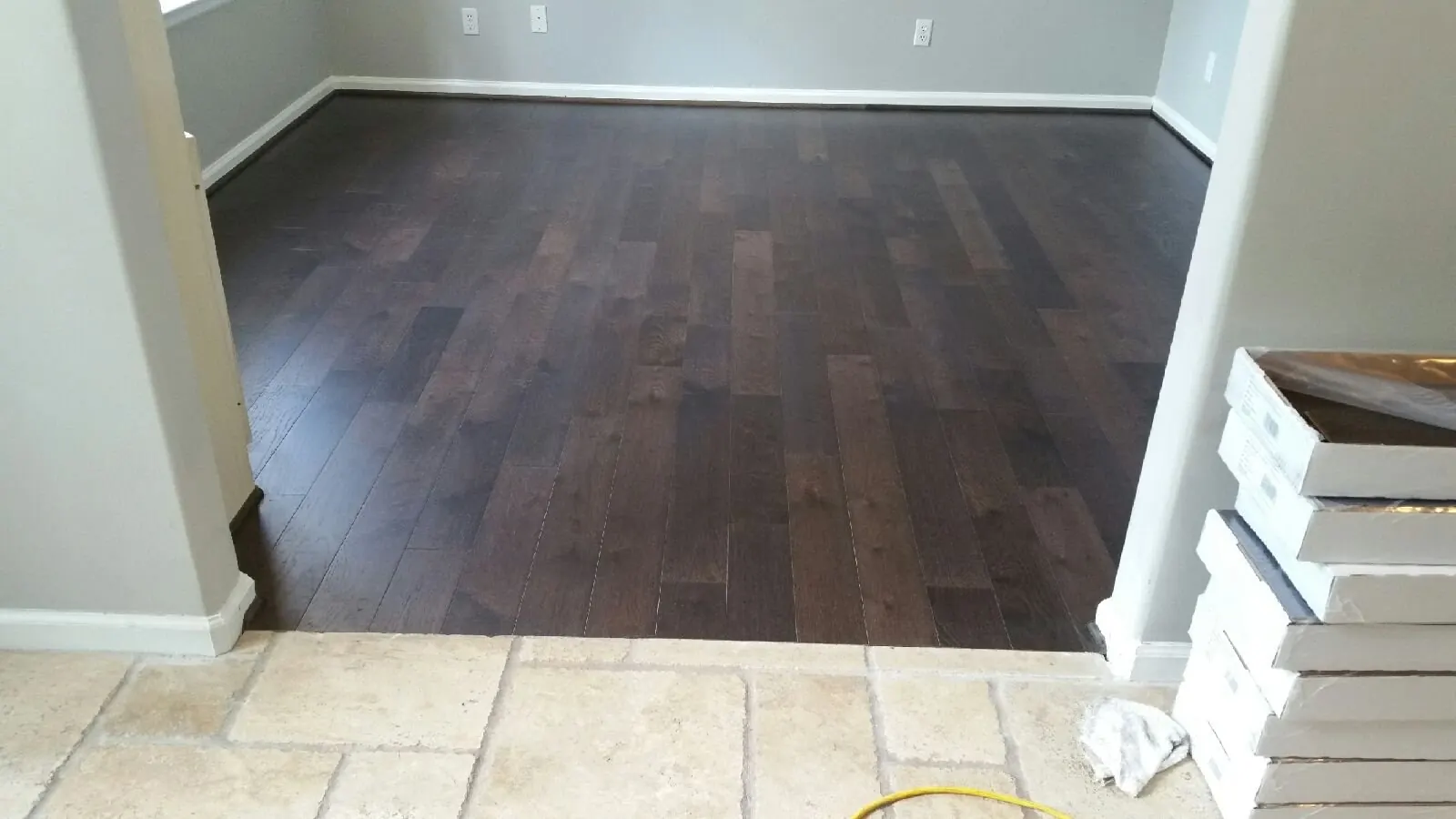
Glue down is our go to on slabs. It gives the most solid feel and the most natural sound. Floating installations work well for some click together products and over existing floors. Nail down or staple down is used over plywood upstairs. We match the method to your product and your home rather than to whatever is fastest.
Layout and trim
Boards are pulled from several boxes to spread color, end joints are staggered, and expansion space is left at every wall. Baseboards, quarter round, stair nosing and transitions finish the job. For a deeper look at our install standards, see the hardwood installation page.
Living with engineered wood floors
Care is simple and almost identical to solid hardwood. Sweep or vacuum often to keep grit from scratching the finish. Damp mop with a cleaner made for wood floors. Keep the AC running so indoor humidity stays roughly between 35 and 55 percent, and use felt pads under furniture.
Refinishing later on
Every few years a screen and recoat keeps the factory finish healthy. When the time comes for a full refresh, floors with a thick enough wear layer can be sanded and refinished just like solid wood. Our hardwood refinishing team can tell you exactly what your floor can handle.
Engineered and solid hardwood compared
Solid hardwood still wins on how many times it can be sanded. Engineered wins on stability, slab installation and wide planks. Over plywood on a raised foundation, either can be the right choice. Over a slab, engineered is usually the smarter one. We cover the tradeoffs further on our blog in are engineered floors as durable as advertised.
Affordable, durable and honest
Engineered floors are a great option for homeowners on a budget who still want real wood. Many come prestained, so installation is quick. We will show you options at several price levels and explain what you gain with each step up, from wear layer thickness to finish quality.
Reliable Hardwood Floors has installed engineered wood across Houston for over 25 years. We are licensed, bonded and insured, a member of the National Wood Flooring Association, and we never send a crew we would not trust in our own homes.
Mistakes to avoid when buying engineered wood floors
Engineered hardwood is a great floor, but a few common mistakes can turn a good choice into a disappointing one. These are the ones we see most often.
Judging only by the surface
Two planks can look identical on top and be very different underneath. Always ask about wear layer thickness and core construction, not just color and price.
Skipping slab moisture testing
Engineered wood is stable, not waterproof. Installing over a wet slab without the right adhesive or barrier is still the fastest way to ruin a new floor.
Choosing a dark, glossy floor for a busy home
Very dark, shiny floors show dust, pet hair and scratches. If you have kids or dogs, a lighter, textured, matte floor will look better for longer.
Floating a floor that should be glued
Floating is faster, but on large open slab floors a glue down installation usually feels and sounds more like real hardwood. Choose the method that suits the room, not just the schedule.
Forgetting about transitions
Engineered floors come in different thicknesses. Plan how they will meet tile, carpet and other floors so you are not left with awkward height changes at doorways.
Not ordering enough material
Running short partway through can mean a different production batch with slightly different color. We order with the right waste factor for your layout and recommend keeping a spare box for future repairs.
Avoid these, and engineered wood will give you real hardwood beauty with the stability that Houston homes need.
Questions
Engineered wood floor questions
Yes. The top layer is a real slice of oak, maple, hickory or another species. Underneath is a cross layered core of plywood or wood composite that keeps the plank stable.
Many can. A floor with a wear layer of about 3 millimeters or more can usually be sanded at least once, and thicker wear layers allow more. Thin wear layers can only be screened and recoated. We check the product specs or measure a board before recommending anything.
It is the best real wood option for most slabs. Engineered boards can be glued directly to a flat, dry slab or floated over a moisture barrier, without the plywood system solid wood would need.
No. It handles humidity changes far better than solid wood, but standing water can still damage it. Wipe spills quickly and choose LVP for laundry rooms and full baths.
A quality engineered floor with a healthy wear layer can last decades, especially when it is recoated every few years. Cheap products with very thin veneers wear out much sooner, which is why we help you compare specs, not just prices.
Many engineered products are approved for radiant heat because the layered core resists the drying effect. We confirm approval for your specific floor and follow the manufacturer's temperature limits.
Related services
Engineered wood floors in your area
Engineered hardwood is one of our most requested floors in these slab heavy communities around Houston.
- Hardwood floors in Houston, TXHome base on Hillcroft Avenue, serving the whole city
- Hardwood floors in Bellaire, TXNew builds and classic ranch homes minutes from our shop
- Hardwood floors in Katy, TXMaster planned communities and large family homes
- Hardwood floors in Missouri City, TXSlab foundation homes near Sienna and Quail Valley
- Hardwood floors in Spring Valley, TXWooded lots and custom homes in the Memorial area
- Hardwood floors in Jersey Village, TXEstablished neighborhoods along White Oak Bayou
Real wood that is ready for Houston weather
Schedule a free consultation. We will test your slab, bring samples and help you compare wear layers and finishes.
Free estimate
Get an engineered wood floor estimate
Tell us the rooms and what is on the floor now. We will bring samples in the species and tones you are considering.
Water damage emergency?
Water left under wood keeps working after the spill is gone. Call our 24 hour line and we will tell you what to do in the next hour, then help you document the damage for your insurance adjuster.
713-270-7800